Search Results
55 results found with an empty search
- Our Mission to Help more Dogs
Over the years of being in the animal industry I have found myself drifting. This drift is likely very personal but it still has a direct impact on my work, Kind Animal Services. If you have been following KAS for any amount of time you are probably frustrated with how frequently I change services, descriptions, update the website, and inconsistently publish content. Kelsie, KAS trainer, walking Krash, foster dog in training, on a city street doing reactivity training. My ambition knows no limit to how much I want to accomplish and what KAS might look like from one time to the next. This means I have attempted many different modes of business, always trying to strike a balance between my heart and my logic. It’s my heart that teaches, it wants to spread awareness of just how sensitive and capable animals are. That successful behavior change doesn’t come from the tools you use but from your ability to communicate and open up to animals and nature as a whole. Then there is the logical business side of my being, she screams “More marketing! Get that article written, that video edited, post that photo.” I can’t ignore the fact that I, like everyone else, is trying to make enough money to buy groceries, pay for farrier appointments, and veterinary visits for the animals in my care, including my foster dogs. The reality is I’m not an assertive male figure that shoves my ideas and services down vulnerable throats. If only I could just speak with that unwavering sureness that what I know can’t be challenged and is undoubtedly the absolute truth. But I’m painfully aware of the negative impact such an absolute mentality has. I by no means represent any kind of perfect knowledge and I see the gaps in the veil of my understanding of animals, learning, and behavior change. AI image. Serious male dog trainer working with a large dog showing appeasement signs. This, I believe, is my power. This gentle personality trait that I am not the sole holder of all there is to know about training animals gives me flexibility and allows me to remain whole. I mention this because I hope that you too can see this and make informed decisions about the professionals you trust with your animals. My dream is to educate the humans that want to listen, how to get positive behavior change. KAS has finally found its niche, simplified its services, and offers more value than most other trainers out there. Our purpose is simple, to educate. The means in how we do that is through 3 main services: Workshop Sessions ($275) are in person single untimed consultation and training sessions typically held in the dogs home. This unlimited and open type of session allows plenty of time for assessments, physical training exercises and set ups, planning, and recommendations. This is my most popular service that clients book on an as needed basis. Six Week Course ($720) is six 45 min once a week lessons. This service breaks down the training plan into digestible chunks with weekly homework for the guardian. Each lesson builds upon the previous week. Tutoring/Field Trips ($120) is as it sounds tutoring or training for the dog only. This lesson is just for the dog to learn from the trainer/teacher. It’s a 2 hour session that often involves picking up the dog and taking them to a specific environment to continue their education and socialization. Pet guardians don't have to be home or present during these sessions. While these services are my bread and butter I also offer board and train options, camps, weekend workshops, group classes, talks, and most importantly virtual consultations. Don’t forget about the virtual consultations! These are a valuable little nugget that can offer those who travel or are too far away for an immediate in person session receive the information and resources they need. I am very proud of my service line up and my ability to build customized behavior programs that offer my clients the success they are seeking without compromising the animals welfare. But it’s not enough. More often than not I offer free resources to people that call, I demonstrate skills and techniques to any one I pass on the street. I don’t want my services to be limited only to those that can afford it. Turning down dogs I know I could help is like ripping my heart out, examining it, then putting it back in. It hurts. There are limits to the quality of my work if I were to take on every single case that came my way as well. I have come up with a new idea I hope will allow me to help more animals and more animal guardians. While there is some luck involved in this new process if it becomes a successful idea I will be doing this 4 times a year, once a quarter. While 4 dogs isn’t a lot it’s a lot of work for me! That’s 3 months of free training, any combination of the services above for free over 3 months at no cost to the guardian. This means keeping dogs in their homes but taking them on as I do with my foster dog program. I plan to offer my everything. In order to support this offering and such intense training and continue to make a living we have to come to a compromise. I am going to be doing a raffle giveaway process. $5 per entry. If you are the winner you can nominate any dog you feel like if you don’t have a dog personally you want to work with. This is a life changing opportunity for some lucky dogs out there. Look, I’m putting a lot on the line to give my whole heart and soul to helping dogs thrive. I’m asking only a little from my followers and supporters. Asking that you enter but even more impactful would be if you would share this with your personal network. I want to reach as many people as possible and the wider I cast my net the more likely I will be able to continue to offer this unique and life changing opportunity to more dogs. Kelsie, KAS dog trainer, holding a spaniel puppy during a puppy socialization/tutoring session.
- Detective Krash [Available]
Krash came to us from a local shelter. We fostered her through their program for a while but after it seemed clear that Krash (then named Lilac through the shelter) wasn't being marketed well and we were not getting much support as a foster family, Kind Animal Services decided we would bring her into our own program. This way we could invest in furthering her education, improve her diet, and ultimately control potential adopters. Krash, was officially transferred into the KAS Career Pathway program, sponsored by your donations. Meet Krash: She is bound to Krash right into your heart with her bright intelligent eyes and huge curious bat ears that tip from side to side as she works hard to understand the world around her. She is a fiercely loyal dog with a splash of whimsical daydream character. I can hear Krash pray every night to simply be accepted for who she is today, not who you think she ”should” be. Krash enjoys the simple life away from the hustle and bustle of everyone and their dog. She is looking for a human partner who chooses a more solitary lifestyle in the outdoors. She would gladly be your camping, backpacking, lake dipping, horseback riding, or hiking companion. Krash is an outdoor nature enthusiast and seeks a family with the same lust for adventure as she. While she does enjoy bounding after fluttery creatures like butterflies and birds she always keeps a watchful eye, ear, and nose on her trusted human. With, Kelsie, and Kind Animal Services Krash has taken playing an extreme version of hide and seek in the woods. Krash has proved to have a strong tracking ability. Being able to hone in on Kelsie’s location and find her hidden in the forest. If Krash was to take up a career, instead of the life of adventure, she aspires to be a detection or tracking dog. Krash has taken a nosework intro class and has been loosely studying to be a shed hunter. A skill that could easily be honed if someone wished to hire her for that kind of thing. At KAS we loving call her "Detective Krash" because she is always got her nose on the trail of a mystery I'm sure she will solve some day. With other dogs, Krash is dog friendly but she isn’t every dog’s cup of tea. She has a boxer play style: meaning she swings her massive paws at her playmates with her heavy weight behind each swing. Small and old dogs often find Krash very intimidating, rude, and annoying at best. Krash is not interested in networking or having superficial relationships with other dogs she meets, so dog parks and greetings on the street are out of the question. Due to missing out on her critical socialization period Krash is under socially developed and anxious of new dogs until she gets to know them. Krash would be thrilled to adopt a sibling that she can build a strong bond with. Her best friends are typically large sporting dogs like labradors. So if you are considering a friend for your middle aged or young large breed dog, Krash would appreciate your consideration. She has suggested when interviewed about her past she likely spent a lot of her puppyhood sheltered and crated. We also suspect she was in a home or cared for by someone who smoked cigarettes, this has not been proven but we have seen height and stress when around people who smoke or in a car with the smell of cigarettes. She was abandoned at the shelter's door so her history before being placed in the system is mostly unknown aside from what we can observe. The shelter spayed her, standard procedure, and this surgery early in life could also be contributing to her poor stress resilience along with her past neglect and inexperience. She is friendly with all people but occasionally finds novel figures spooky. She is considered a reactive. This is a fear based reaction mostly seen when she sees a dog she doesn’t know, occasionally a person, and she is restrained (on leash or behind a fence). The behavior can be a startling display of barking, lunging (bluff charging), and piloerection (hair that stands up). With that said, when she gets ample time in a safe and controlled space to investigate the environment or beings she stops. Krash might do okay with mature and dog-savvy children but if she could choose her ideal home, she doesn’t feel drawn to that lifestyle. She is curious but inexperienced with children and would require a patient adult presence to advocate for her and give her breaks when she gets overwhelmed. Krash is intelligent but her ability to learn is strongly tied to trust in her teacher and need for safety. It is extremely important that Krash is not “corrected” or reprimanded for her reactions (big displays of emotions) no matter how aggressive they might seem to spectators. Creating safety and having patience is critical to Krash’s ability to overcome her fear and trauma, it’s non-negotiable. Krash is a unique dog in her response to being scolded. When she feels pressure and becomes stressed she will double down on the behavior or sink deeper into the panic. She becomes numb to the punishment and what was just a fear reaction and display of emotion can quickly escalate. Krash needs a human who can be her rock — Calm, patient, and shielding — to lead her through the fog of fear/instinct/panic to the shore of thinking & learning. Krash is a genuinely open and gentle soul who is looking for a human (and a dog companion) that can be her safe space now and forever. She is seeking a warm and open hearted home and in return she will blossom into a beautifully willing dog partner and loyal companion. Krash wants more than anything in the world to be accepted and loved unconditionally by a human who can see the magical spirit she embodies. Truly she will crash into your heart and home with grace, light, and loyalty. Is your heart open and braced for the Krash? If you are interested in adopting Krash please reach out to us and we would be happy to assist in the next steps of the process. Krash has been in rescue since 5/3/2024 and at about a year and a half now she really needs a forever family to bond with.
- Have Our Dogs Changed or Just Us?
Over the last 10 years of being in the pet industry and studying dog behavior. I hear an echoing statement from clients that haunts me. The story goes like this: These are often clients over 50 in their 60s, 70s, and 80s. They come to me with young typically poodle mixes (not all but many). They are struggling with training these young rambunctious companions something they have never experienced before. These are experienced dog owners and have been raising and living with dogs most their life. They grew up with dogs, they had a dog in their early adulthood, raised a dog along side their children... but now they can't seem to understand why they are not able to get control of this newest member of the family. The behavior issues these clients are facing very from excessive and uncontrollable barking, reactivity to other dogs, tire chasing, aggressive or startling reactions to strangers or children. I have a tendency to flip back and forth in my head on the topic. Maybe we should just revert to old ways, would I have more success in helping these people if I utilized more direct and harsh methods? I spend hours researching, watching videos, and trying to understand the effectiveness and ineffectiveness of old-school "broom training" or "newspaper training" methods vs. the more gentle positive reinforcement approach of training dogs. In the next breath I see the fear and stress in the dogs eyes, the frustration and anger in the human, and the eventual relapse of the unwanted behavior. I can't look past all the material and knowledge we have about learning to date, the quality of the dog-human relationship, and what we know about instinct and unconscious mechanisms at play inside every life force (genetics, hormones, blood chemistry, gut health, and more.) Yet, there is still mounting complaints from my elders that their dog owning experience has changed. What has changed? I am going to attempt to describe my outlook on the matter and various elements that may be impacting our modern pet owning experience. Breeding There are some incredible projects out there like the Functional Breeding project that I think are on to one piece of the puzzle. I have been seeing a huge push for these "designer dogs" and specifically doodles. Among my colleagues it's pretty clear that we all antidotally are experiencing a decline in these dog's health, physically and behaviorally. Personally, doodles are some of the most socially frantic and stressed out dogs I work with. Of course this does not apply to all doodles, I know a few stable and calm doodles, but those are often working service dogs, selected for their collected personality and work ability. Again this entire article is based on my opinion and antidotal experience. I am in no way saying this is the sole cause of the issues we are seeing but a potential player in the game. We are not selecting and breeding dogs with the whole dog in mind. We are near-sided for non-shedding "friendly" dogs and anyone can breed them by crossing favorite breeds with poodles. Change of Human Lifestyle Next up, we can't blame everything on the dog. Our issue could be that our lifestyles are changing rapidly, exponentially in fact. In just one life time we now have access to technology that was the product of science fiction in the past. Even old dogs, I mean humans, can learn new tricks and have been! We live in smaller and more crowded spaces, we spend more time on screens and stationary, and we are addicted to immediate results and high production. Our dogs (like us) are biological animals that move at biological speed. After years of evolving together humans have, it appears, diverged from our shared evolution dramatically! Where dog's lives are changing they are not in the drivers seat but being dragged along. They just can't evolutionally keep up. Dogs have been our companions and assistants. Used for caring our burdens, protecting our families, hunting, food production, and transportation. Today they live much less eventful lives, get far less life experiences, and don't really serve the needed purpose of the past. Even when we didn't need them they were still granted much freedom and experiences because we spent more time outside, so did they. Dogs and children everywhere are not getting the same amount of exposure to nature as those just 60 years ago. Our lifestyles have changed and I think it's having a massive effect on the behavioral health of our dogs. Because of this, I think that more people should abandon dog ownership and realize that our canine companions are just not needed and don't thrive in this new world we are moving to. My heart sinks at the thought of all those abandoned dogs, and potentially the dog breeds that will likely go extinct if we were to abandon dogs on our evolutionary road. Please know I'm not saying we should give up on dogs currently in our lives or that no one should own dogs. I'm thinking on a much larger scale, in the decades to follow, I think dogs should only be owned by a few dedicated dog enthusiasts (those who train and compete), working farms, hunters, police and military and service dog organizations placing dogs wisely with people who can benefit from their service. I think we should take a hard look at our selves and our lifestyle. No longer accept "Just because I want a dog" as a reason for bringing a dog into our home. Change in Prospective With technology, education, and the spread of ideas we have more research and understanding about brain function, behavior, and biology. Science and personal experiences with dogs as companions has changed our prospective. Now that our life no longer depends on the dog to do his job we have started becoming aware of the dog's experience. We are opening our eyes to how they feel, their emotions, comfort, and well-being. They are our companions and family members after all, they deserve a life of comfort. Dogs no longer hold the space of a tool or farm equipment, they are our friends. This shift in perspective and gains in science that support the fact dogs feel emotional distress, social pressure, and have preferences has made us soft. It might be natural to take this "softness" as weakness but I don't think its a weakness at all! It's an awareness and an openness to the fact that our dogs are subject to many of the same life struggles humans are. As we broaden our prospective about the dog experience it is normal to feel a little helpless and overwhelmed by all the information. Now we see there is a behavioral issue that we were blind to with our past dogs but the path to resolving the behavior issue is no longer as straight forward as it was when we had narrow vision. Change In Expectations One more piece of this puzzle I cannot conclude without addressing. What if, with technology priming us for immediate and specific results, our "too busy" lifestyle, and our constant consumption of information changing our prospective have skewed our expectations. Media does a really good job of seeping it's toxic potion of the ideal life into our minds. We see a Subaru commercial with a happy family and a shaggy (non-shedding) muddy dog bouncing into the car with it's family. No leash, no training, no information about how this family got to this moment or what happened after. We imagine the dog walking obediently at our side, comforting us when we are sad, protecting us when we are afraid. Our expectations and ideals don't include the fact dogs have a lot of needs beyond food, water, and shelter. They experience trauma and mental illness. They are subject to stress and anxiety. Our expectations are all about us and don't consider them! Rarely, do we plan for how we are going to provide emotional security, accommodate for the dogs natural impulses (i.e. chasing, digging, barking, biting, and more) , teach the dog how to respond to and cope with stress, empower them to have agency and obedience at the same time. Then I ponder, how can we prepare our dogs in this way when we can hardly do this for ourselves. Did humans of the past really used to have all these expectations of dogs? From what I can tell we only had a couple: do your job and don't harm our families. Dogs were then left to be dogs. To chase dear, sleep, dig, socialized with other dog family members, etc. This goes without saying, we are also under more pressure than ever to own "well behaved" dogs in the public eye. The fear of coming in contact with people and their judgement is becoming impossible to avoid. Then to top it all off we don't want our dog to get us sued or start a legal debacle with our neighbors. We have pressure from all sides to have quiet soulless obedient dogs. Maybe it's time to get a robot. Individual Selection Now I think that this is a very real problem of the day. If you narrow our focus to the dog in front of you. How did you select them and what were you selecting? I see people adopt dogs purely on looks with out consideration or assessment of personality, preferences, tendencies, or sociability. In many cases families have selected the wrong dog for their ideals. I have clients who are active adventurers they bike, hike, and cross country ski they were hoping to get a dog that would match their enthusiasm for the outdoors. They select a breed/look of dogs, that is large and athletic, that they imagined would enjoy those activities only to find out the dog they selected is afraid to leave the house, hates going outside, and thinks every shadow, human, and dog it meets is a threat to it's safety. Another case, couple adopt a small mixed breed puppy hoping for casual dog walks in the neighborhood and a cuddly lap warmer in the house. Friendly with the adult children and grandchildren who come to visit. On the contrary the dog they adopted is a fierce resource guarder, highly intelligent (always getting into trouble) , and does everything with over the top intensity. They got the opposite of calm. It's not 100% the fault of the owner, because many of these pet parents didn't have the information to make a better decision. They were also influenced by media, breeders, friends, and rescues. In the end for many of the reasons I have already mentioned the pet owner selects an individual dog that is ill matched. I think we could do better about informing dog adopters about the individual and how they can better assess personality or hire a professional assessor before adopting a dog/puppy. No matter the reason, all of or none of the reasons I listed, the dog owning experience has changed in recent years. What do you think is the driving cause of this change? I'm really curious to hear from you. Let me know in the comments below.
- What To Do When Your Dog Reacts!
This is the most common question among my reactive dog clients. "...But, Kelsie, what do I do WHEN they have a reaction?" My answer honestly is nothing much. You see when a dog is in the midst of reacting to a trigger they are drowning in stress. The thing with stress in large doses is that it inhibits the brain from learning. So at the time of a reaction there is nothing you are going to do that will be productive in teaching your dog to react less. Okay, I would be lying if I said there was nothing you could do to make them react less. You could potentially use punishment but it would have to be punishment that was strong enough to force them into shut down and cause them to stop all reactions and behaviors. It would require a heavy hand and in the end would not improve their underlying reason for the reactions in the first place. In fact the use of punishment to stop big reactions almost always backfires because dogs under stress are more likely to start generalizing their fear if you try to use fear to stop fear. In the end this puts you in a situation worse than you started! So let's not use punishment or annoyances like shouting "no" or jerking on the leash which typically are not strong enough to act as punishers in the first place. Here is what you can do: The golden rule with reactive dogs: Avoid triggers all together. Try to walk in locations or times of the day when the trigger is not present. Consider minimizing or stopping walks all together. Stressing the dog out more and forcing them to "get over" or "work through" stress inducing situations is the last thing we want to do. This is because by putting them repeatedly in known stressful situations will likely compound the problem and sensitize them to fear. Create distance if you spot triggers coming or you know there is the possibility to come across triggers set yourself up to be able to retreat and create distance from the trigger. By retreating to a safe distance you can then keep your dog under threshold and if they are not drowning in stress they will be capable of learning. Ding, Ding, Ding! This is a great teaching opportunity if executed effectively. Get busy or better yet get active. By moving your feet and your dogs feet you can prevent your dog from fixating or locking on to a trigger that might be a little too close for comfort and training. I sometimes lunge the dog in circles. Making the circle longer in the direction away from the trigger. This creates distance when you have a dog that isn't willingly moving away because they are already beginning to escalate their reaction. This technique can be messy but a good rule of thumb is don't let the dog lock up on the trigger and don't get stuck behind the dog pulling backwards against them. You want to stay 90 or 45 degrees to the side of them to best utilize your leash pressure and keep them from digging in. When in a pinch start body blocking. Put yourself between your dog and the trigger. I only recommend this with dogs we know for sure do not have redirected aggression! This means that in moments of intense stress the dog will redirect their reaction (aggression/frustration) onto something other than the trigger like the person handling the lead or getting in their way. This very aggressive technique should only be used when all other options are not available. I use it if I have a dog in an indoor space with no room to move. Find a wall or corner and sometimes forcibly hold your position between your dog and the trigger. If you can feed them treats great. Be ready to defend your dog against their trigger at all costs, tell people (if people are the trigger) to keep walking. If the trigger is other dogs be ready with citronella spray, a hand full of treats, or an umbrella to fend off any oncoming dog. On the topic of umbrellas if you find your self in situations with no escape often, because you live in the city, than carrying an umbrella might be a great option so you can literally pop up a shield to protect your dog. Note that you do need to spend time desensitizing your dog to the umbrella before this will be a worthy technique. Body/Head lock. Now I only recommend such physical force and this technique should be used in emergency situations only! If you have a dog that could potentially really bite someone or something and you know they will not redirect on to you than this move is worth knowing. Again this is for emergency situations and is intended to immobilize your dog to prevent a dangerous situation. For instance a child running into your dog's space. At the end of the day I would rather my dog bite me instead of a child. Biting the child is surely a death sentence for any dog. I also want to mention that if your dog is a bite risk then you should be utilizing a muzzle when walking or training them in unpredictable areas. To immobilize a dog quickly I take hold of their collar, pinching it so that it tightens high around their neck and they will not be able to back out. Then I take my other hand/arm and hug their abdomen against my hip/body. In an athletic stance with one foot slightly forward and one back I push my knee or shin into the dogs ribcage right behind their shoulder pulling their head into one and their hips into the other hip. You are essentially bending them around your leg. Meanwhile I would begin shouting at the incomer to get away because I don't have hands to or the ability to defend my dog in their now vulnerable state. You can also do something similar against a wall. This can sometimes free up a hand because you can use your leg to hold their back end against the wall and one hand on their collar to hold their head. Practice this technique with your dog a few times so you can feel comfortable with where to hold and how to get a good grip. Make sure you pay heavily with tasty treats during practice. This will also help your dog be more comfortable if you do need to use this technique. I know that number 5 is likely to get some hate from some positive only trainers but the reality is that life happens and I want you to be prepared and know what to do if a situation arises. It should be known that only #2 involves training/learning. All other techniques are just to try and get out of the situation quickly and will not help your dog learn to respond better the next time they see a trigger. Notice I didn't mention distracting the dog with food. I don't recommend this because by distracting the dog we are potentially raising the risk of the dog becoming startled if/when they do finally notice the trigger. I always encourage the dog to notice the trigger and then I follow looking at the trigger with a treat. I never treat BEFORE the trigger has been spotted! If you hide behind a car or visual barrier where you can see the trigger but the dog can't then this would be a good time to distract while the trigger passes hopefully unnoticed by the dog. Once more I want to drive home that by the time the dog is reacting it is too late to teach them to behave better. Get out of the situation quickly, take note of what happened, and consider how you can avoid (#1 suggestion) something like that from happening in the future. Then call a behavior professional to help you teach your dog a different response. So what do you do when your dog reacts? What is your biggest take away or what are you going to implement?
- Teaching "Off", "Up", & "On" Simultaneously
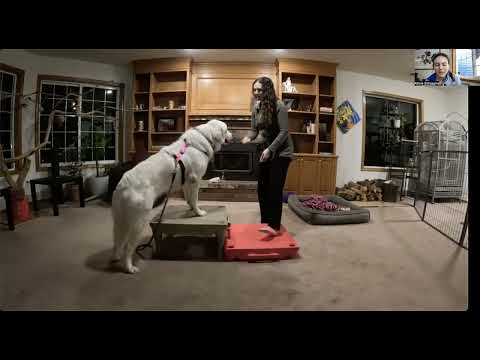
Here is a nice training review of a training session I did with a dog, Ophelia. My goal was simply to build some confidence, begin establishing communication, and trust. Ophelia is a very shy reactive dog that startles at all sorts of things. She was enrolled in the Canine Outdoor Camp to offer her some more diverse experiences. It was clear when she arrived that she needed more positive experiences in her short life. In this session I worked on 3 skills simultaneously. "Up" - put front feet up on the platform "On" - All four feet on the platform "Off" - Usually, means front feet off. However in this session you might notice that Ophelia was struggling with this position. Teaching specific movements is a great physical exercise that can stretch and strengthen a dogs body. It can also help large dogs and adolescents that struggle with spacial awareness learn where their body is in space. This was my first training session ever with this dog so you may observe some sloppy training. I didn't have a strong goal or direction going into the training session. Sometimes with the first training session or two I am experimenting with timing, motivation, and learning history for this individual. My real goal during this training session is to learn WHO this dog is? As a KAS student in our training programs it's worth mentioning that I also use a reinforcement cue "fetch." This tells the dog that a treat (or other reinforcement) is now available. I use "fetch" with both treats or toys to mean that they can now chase after and get the treat/toy. This also acts as a release cue or an end behavior cue. They won't be staying or continuing the behavior if they are chasing a treat across the floor. Using "fetch" when working on stationary or minimal movement skills is a helpful way to reset the scenario. Letting you loop into another repetition. Enjoy the lesson.
- How to Pet Your Dog and How to Train with Affection
Affection Loop Training also known in the more scientific world as Constructional Affection Training. I’m not going to try and break down what constructional means for the purpose of this lesson but you can think of it as building something, constructing behavior using affection rather than treats or play. I’m always shocked at how much there is a need to talk about appropriate touching, petting, and affection with animals. Social animals specifically have a social and physical need for affection and acceptance into the group. So often we make these common mistakes. Now keep in mind there are always exceptions to the rules but I find this to be true with the majority of dogs. Stroking - Extremely stimulating and some dogs find it very irritating and not rewarding Patting - Some animals might find gentle and playful patting acceptable but if your goal is to train with affection this will likely be too stimulating or they may find it annoying, irritating, or even painful if done too rough. Fast scratching - This is probably the most common way people interact with dogs but it is also the most stimulating! It revs them up and why many puppy owners will experience their puppies biting and pouncing at them. It can be used in play but should not be part of your affection training protocol. Now, I want to point out that for affection loop training we are focusing on calming the dog and co-regulating emotions and big feelings. So our approach when petting our dogs should be relaxation, calmness, and comfort. This training protocol can work wonders for highly anxious and over aroused dogs and puppies. One pet parent found that her highly anxious german shepherd dog that consistently couldn’t sleep through the night and would pace around the house all day long, began sleeping through the night and greatly reduced her barking and pacing after putting this training into practice. Not all dogs are the same so you may or may not see dramatic changes like this with your dog but doing this definitely won't hurt! First, you need to change your thinking about training from linear to cyclical. All day long you will be looping through this pattern. Second, this protocol is designed to fill your unique dog’s need for affection. Dogs have different sized affection buckets. Some dogs will be satisfied with about 30 min of quality affection and ready to do other stuff. Where other dogs will need up to 2 hours of affection or more. Don’t worry you don’t have to spend 2 hours straight giving your dog affection. Think of affection like you do your dog’s exercise requirements, daily food intake, water requirements, or sleep. It’s one of the core needs that should be met daily. Sometimes there are things that you will combine such as mental stimulation and affection, or play and affection. Other interactions will also add to your dog's affection bucket. Third, learning the process of timing to build in the teaching element of affection training. After all, our goal is to teach the dog to be calm when greeting people and not to jump, to relax when home alone, or to not beg at the dinner table. Affection training can, when used appropriately, teaches all of these things and more. The level at which you can use affection training to teach wanted behaviors depends on the dog and your unique situation. So I mention these learned skills as suggestions not as a standard or even to say that this is the protocol I would choose for this specific dog. Remember that there are many many ways to get to the same result. At KAS we are all about utilizing the method that is going to fit the individual best. We do this through assessment, observations, and some trial and error testing techniques to find the best match. We also always want to screen protocols for the most human and gentle approach that will be successful. I ask and re-ask the question: Is this protocol causing this dog stress? Is there something that I can change or another approach that would cause less stress? While providing affection to your dog make sure that you observe signs of stress, make note of what they like, or don’t like. For this training we are here to serve our dogs. Okay, without further ado enjoy this video review all about how to do affection training. Resources: For more information about how to pet your dog (use TTouch method) check out https://ttouch.com/ For more examples and information about Constructional Affection check out this website: https://www.constructionalaffection.com/ Please share in the comments all questions and concerns. I would like to start a conversation around affection training and help you reap the benefits.
- Why Playing with Your Dog Matters
Playing with your dog is an opportunity to deepen your connection and bond. The stronger bond you have the more willing a partner your dog becomes. You become a fun and dependable friend that your dog is more likely to listen to and act when you make requests. Of course you can't short cut practicing and training your dog to understand the expectation of your request but with a strong bond they will be more attentive. In the video below I talk about how to play tug with your dog and show some video demonstrations of myself playing and interactive with two very different dogs. A key take away is that play time should be fun for both of you. You shouldn't continue to force play if one of you is irritated or upset. Put it away and try again at a later time. Think about your relationship with your best human friend, how do you treat them and them you? Your relationship with your dog should mimic this in many ways. There should be lots of shared joyful experiences between you; you can both safely and politely express any feelings without being met with anger or frustration; you and your friend respect each others unique personalities. Playing with your dog is part of the attraction for pet ownership. I am approached all the time by people who want to teach their dog to play fetch or interact with their dogs but their dogs aren't into it. This is often due to them not being a fun and engaging partner for their dog. I want to encourage all pet parents to spend more time playing with their dogs. In fact this time together trumps most all other activities you might do together, including walking. If you have a reactive dog play time is non-negotiable and a great substitute for leashed walks in the neighborhood. Once you and your dog are equally enjoying play time together, I encourage you to integrate training skills into your play time. By asking for and practicing skills you have now turned play time into a fun learning experience that will help keep the game fresh and interesting with new challenges to tackle when you pick up a toy and start to play. Have fun with your dog! If you have any questions regarding your play with your dog reach out. If you are a program member feel free to submit a video of you and your dog playing for assessment and feedback. My work here is help everyone have a healthy relationship with their dog. Bonus: Can you see why Baker the golden retriever became sensitive and unwilling to continue playing with me? (What are your thoughts in the comments.) When recording this video I didn't pick up on it but after when uploading I realized there was a very clear reason why Baker became disengaged and started shutting down.
- Resolving Young Dog / Old Dog Conflict in a Multi Dog Home.
This training protocol is specific to a particular situation but I know I see similar troubles in other homes. Recommendations may need to be adjusted slightly here and there to fit your dog-dog conflict. This case is one of a multi-dog household where the smallest young dog is picking on the geriatric tiny-dog in the home. It is likely that the conflict was sparked by (1) this puppy’s genetic personality tendencies of being originally bred for herding cattle, (2) she is also the smallest of a group of puppies all being raised together in the home. It was not unseen that she gets pushed over, stepped on, or play was too rough for her with the other puppies. This young dog found that a dog in the home smaller and more fragile than her that she could get a rise out of. This type of one sided bullying fun is often the beginning of damaged relationships between dogs. If they had the ability to choose their families they would not be living together. Street dogs don’t have conflicts as frequently because they just avoid or move to other areas away from dogs they don’t get along with. Choosing their friends and dogs they like to band with. This is a luxury our house dogs or owned dogs don’t get. It is not uncommon for me to see young dogs develop into bullies. Most of the time, anecdotally, very young puppies that are put into overwhelming social situations where they get bullied turn into the bully. Sometimes the dog that initially bullied them didn’t mean to be a bully like in the case with this puppy. The other puppies she lives with are litter mates and they play rough with each other. So when one of these puppies play with this little dog they wrestle in the same way. Unaware that fair play means they need to adjust their play style to their playmate. This young smaller puppy now sees the tiny old dog as an opportunity to practice what she learned and have some fun of her own. The problem is this old dog does not see it as fun and even as pain inducing and very uncomfortable to have this young dog rambunctiously snapping, barking, lunging, pushing, and jumping at him. Quickly this difference in these two dogs escalates. One getting defensive and more aggressive in their behavior till fights start to break out. It’s all fun and games… Until it turns into a fight. Something I think is important to mention is that play is only a degree away from a fight to start with. Both are high arousal activities that require the same motor skills. When I have someone who is completely new to dog ownership and has never seen dogs play they will freak out thinking that their dog is fighting. Though typically we instinctively don’t mistake a real fight as play, subtle conflicts between dogs can be easily miss identified. The protocol Disclaimer: if your dogs are fighting to the point of injury for either dog, or those around the dogs, it is advised that you seek professional help to assess the situation and create a protocol designed for you. Aggression is not something I recommend anyone tackle without professional guidance. Stage 1 Separate and reset! Both these dogs need a nice long holiday to help them reset and relax without anxiety or fear about running into the other dog. Be creative. Some people do this within their home, sectioning off their house so each dog has their territory. Others in smaller homes use some sort of rotation system where one dog hangs out in the bedroom and another one gets to be in the yard/house. They are then safely rotated in spaces without having any run in with the other. The later method takes some really strong communication between household members so that the dogs are not ever in the same space at the same time. You have to find something that is sustainable for you and your family. In some cases this is where one dog is sent away from the home to a trainer or a friend's house until everyone (including the dogs) are ready to begin the next stage of the protocol. I recommend a minimum of separation for 3 weeks but definitely can be longer. During this time of separation you can work on designing your training plan and begin working on any independent skills the dogs will need before you can start reintroducing them. Stage 2 Skill building. The skills that each dog might need will vary slightly but here are a few. I’m not going to go too in depth into how to break down training these skills. I have many other resources that will cover that. Name-attention/focus/eye contact. You want to be sure that both dogs have a strong name-attention. They immediately direct their focus in the caller's direction and momentarily stop what they are doing. Eye contact isn’t necessary but it can be helpful to build some duration up so it can buy you more time to take action. The behavior that you want to see is a stop, turn, and look at you for about 3 seconds. Recall/Targeting. When you have dogs that are in conflict you need to be able to call a specific dog to you but not both. I suggest teaching recall in the form of target training. You want to teach your dog to look at you when you say their name, then you can ask them to come to you and touch your hand. Teaching them to come and make physical contact with your hand makes it easier to grab a collar and get control of them before they run back into the conflict. On Your Mark. Each dog in the home should have a place that when you say they go to it and stay there until released. I like to use platforms or lifted step stools or dog cots for places. If your house is small then you can choose to have a place be on a couch, a chair, or ottoman. A word of caution about using furniture: You may find that they become possessive of their space especially if it is in the way of traffic or a comfy space sought after by other dogs. If your dog has a tendency to resource guard, ensure their place is out of the way and strictly theirs. It can also help if it is something you can put away to prevent guarding behavior during times when dogs and people are hanging together in a group. Stay & Self Control. A very important skill is teaching your dogs to control themselves, control their impulses, and wait for things to come to them. You will need this to keep them from running right back into the conflict. This starts with teaching a stay. You can use your place and simultaneously teach a down stay as well. Look at That. This is a very well used skills game that teaches dogs to look at an object or in a direction. It can be helpful but is not necessary to teach dogs in conflict. However, if one dog is sailing through their skills then this can be a fun additional skill to build upon. I find that this game will be quickly learned in the next stage of the protocol without prior training. For practice you might have your dog doing a stay put a treat on the floor and mark them for looking at the treat instead of away. In the end we want to teach our dogs to look at things that frustrate them or scare them to get information and then away, back at their handler, for reassurance and emotional regulation. All of these skills should be taught using positive reinforcement and approximation shaping. Meaning you start with an easy variation of the skill in a low distracting environment then slowly through repetition begin to build challenge and add more distractions. Remembering that this is all done in separation from the other dog. Stage 3 The Reintroduction. The only time the dogs should see each other in this stage of training is during formal training sessions. It can be incredibly helpful to have a partner or helper to handle one dog while you train and work with the instigator. Often one dog will need less skills. For this case the tiny old dog I’m sure wants nothing to do with the puppy. He would be happy to ignore her completely, making the puppy the instigator and the one that will need more of the training skills in the previous stage and handling in this stage. If both your dogs are equally instigating or going into the other’s space then ideally your helper is a household member that is interested in doing some training alongside you. You can do some of these training sessions carefully and single handedly with the creative use of baby gates, exercise pens, tie backs, or other equipment to contain and control one dog while you work with the other. This is only doable if the dog not working with the human is okay and comfortable with the set up. If you have to work alone you may need to build up the dog’s tolerance of being confined to the area you plan on using during training sessions BEFORE you begin training. There are two types of training sessions and what one works for your dog will depend on the motives behind the instigator of the conflict. If the instigator is starting the conflict out of fear. Maybe they feel threatened and are aggressive because they want the other dog to move away. We call this distance seeking or avoidance behavior. This means that a very gentle form of avoidance training (negative reinforcement for the nerds) could be very effective. On the other hand, if the dog is aggressive and escalating a conflict out of frustration and to get a reaction in the form of attention (good or bad attention is still attention) from the other dog then a positive reinforcement technique is likely going to be the better route. I’m going to explain both briefly but my guess for this case is that the dog is doing the behavior to get something from the other dog versus avoiding something. So let's walk through a high level positive reinforcement reintroduction training session. The key with both training sessions is that you want to start the dogs at a distance where they are aware of the other but not so close as to get any kind of reaction from either dog. Positive reinforcement reintroduction training session: This is positive reinforcement so you will want to be sure to have your dog's favorite food. These things should be on your person or within arms reach. Open the door where the other dog is waiting or have the other dog become visible by either you walking into view or the other dog moving into view. How you do this depends 100% on your chosen set up. Focus on the dog you’re training. The moment that they do anything that is non-aggressive, mark with a clicker (“yes” if you prefer) and treat. Your rate of treating/reinforcement should be very high. You want to mark and reinforce repeatedly like a machine for every behavior but especially keep an eye out for looking in the direction of the other dog, looking at you, laying down, sitting, and sniffing the floor. Keep the dog in view for about 1-5 min. Varying the length of time so that it’s not too predictable for the dogs. Move the dogs out of sight and separate again. Spend about 1-5 min alone with the dog. During the alone time DON’T GIVE TREATS. In fact you can go about doing something else if you would like you don’t have to be paying attention to the dog specifically. You will want to only repeat this 3-7 times. Mix up the number of repetitions you do each training session. Once you are working at 5 min of time visible together you can start to gradually increase this time but remember to also vary the duration of time together. You don’t want the training sessions to incrementally increase. This keeps the dogs guessing. You don’t want them to know how long they will have to be in the same room. Each time they are visible to each other you want to make sure you are giving them attention. We call this training method Open Bar/Closed Bar. When the other dog is visible it’s an open bar where treats and fun flow. When the other dog is out of sight the bar is closed. No treats and the increased attention is gone. Negative reinforcement reintroduction training session: Like I said before this will not be effective unless what the dogs are trying to accomplish is distance from the other dog and the conflict is started by fear. You can look up this procedure in other literature; it's called Constructional Aggression Training (CAT) or Behavioral Adjustment Training (BAT). Similar to the Positive Reinforcement procedure you want to set the dogs up at a distance that they are comfortable and not reactive. You want to set them up for success. You won’t need, nor should you have treats for this. Have the dogs come into view. Pause for a couple of seconds when the dogs do one of these behaviors: look at and then calmly away from the other dog, sniff the ground, look at you, or stand aware but not facing the other dog. The moment the dog does one of these calm polite interactions you are going to say “good” and remove the visibility of the other dog. Pause out of sight for 1-3 min before repeating this again. This works because you are respecting the dog's wishes to create distance between them without it having to escalate into a conflict. Sessions to ensure you are not pushing for far too fast should not last longer than 20 min. After each training session if you are to be successful I advise you to take a moment to work through these training questions. You will find some data recording available to you through your Training Tracker as well. Do this step and share the training information you collect with your program coordinator for feedback and further suggestions. Training Session Worksheet Date & Time of Session: Who was involved? Trainer: Helper: Could anything have influenced today’s session? Example: arriving or just leaving, construction in the neighborhood, thunderstorm, visiting the vet in the last 24 hours, etc. Did you get a video of the training session? Upload the video or share the link with your trainer for feedback. How do you feel your training session went today? Feel free to rate the session if this is an easier way to communicate how the session went. What do you think could have gone better about the training session? Be specific. What do you feel went well about the session? Be specific. Did you feel this lesson was very easy, easy, medium difficulty, hard, extra hard for your animal overall? Do you feel you are moving in the right direction? If not, explain what your goals are and some ideas if you have any about what you can try next time to stay on track. Stage 4 Casual hang out sessions. After many repetitions of short and controlled interactions you will know you're ready to move on when you see the dogs immediately offering alternative behaviors and are deliberately ignoring each other the moment that they are aware of the other dog. Now it’s time to remove the breaks and have the dogs hang out casually and continually monitored when in the same room together. You will do the same positive reinforcement technique you do above. However, now you will not be taking a break. So you can save your marks (clicker/”yes”) for very specific behaviors and when you see a dog make a good choice. Look at the other dog but look away. Move around the other dog widely and with respect Sniff the floor and turn 90 degrees from the other dog. They offer long stretches of looking at you Going to their places Coming when called or responding to your requests Offers to lay down or sit relaxed in a space away from the other dog. You can’t let your guard down! The entire time that the dogs are in the same room together you want to be watching both dogs for signs of relaxation or self control. Each time you spot a calming signal you want to mark and reward. Start your sessions at around 10 min and you can gradually increase the time as you need. It can be helpful to leash one dog or the instigator and have them tethered to you or dragging their leash. This depends on what you are more comfortable with using to control the dog. By keeping a leash on you then have an emergency break if you see someone thinking about making a poor decision and disrupting the peace. Remember through all of this to go slow. You didn’t fall in love, become best friends, or get comfortable talking to your boss in one day. It takes time to heal a relationship and form new habits. You will need to be diligent but it is extremely possible and I have seen it happen. I don’t recommend ever leaving the dogs unattended alone for any stretch of time. You don’t want them building bad habits when you are away. Though it is possible to eventually get them to a place where the dogs can make their own choices, each case is different and I wouldn’t want all your hard work if you made it to Stage 4 to be unraveled because you left the dogs home alone. For any further questions or guidance don’t hesitate to reach out. I know that this is not exactly a detailed training plan and you are bound to have questions. It’s the best I could do keeping it flexible and not having to write a book.
- Teach Your Horse To Stop Diving For Grass
The story is as old as the hills. Horses are grazing animals and when we are working on green pasture and any grass areas our horses will gravitate to the grass. Most equestrians I talk to find the available grass annoying at best and downright unacceptable at worse. Have you been faced with a pushy, heavy headed horse that requires constant reminders and corrections to keep their head up off the ground. Maybe you have resorted to working your horse in a well kept arena with no nibbling opportunities to tempt your horse. This isn’t the worst option but it definitely doesn’t solve the underlying problem you are having. It’s not uncommon for me to hear people embarrassingly admit they are working on it as they snap the leadrope at their horse's face or yank abruptly on their halter. Most call their violent corrections “working on it” but the way I see it they are waging an ongoing battle between the horse's instinct and design and their own strong opinion of what a “good horse” looks like. I know first hand how exhausting battling instinct in any animal can be. It’s not a war you are likely to win without seriously damaging the animals psychological wellbeing and possibly negatively impacting the animals overall welfare. This is without mentioning the withdrawals these kinds of training methods make to your relationship trust-account with the horse. Let’s jump into how we can once and for all solve the issue of diving for food with this simple and effective training protocol. --- To begin to right this very natural but viewed as “wrong” horse behavior we need to first reevaluate our expectations of horse behavior. Take a moment to appreciate your horse in their natural state, eating. Give them their meal or turn them out to graze prior to your training session. Horses spend most of their day eating, it's the way they were designed, the rest of the time is sleeping, and traveling to new water sources or greener ground. Young horses will play, and all horses have the ability to hold deep relationships. This first task of appreciation and being present with your horse while they do their own thing while they eat is necessary. It’s acknowledging their drive to eat, being part of their horse world, and filling their tummy. Of course you don’t have to stand here doing nothing, you are more than welcome to clean their stall, groom them, braid their mane and tail, clean your tack, or do whatever other things you want around your horse. All the while being aware of them munching away. Try to imagine that you can telepathically talk to them. If you're like me then talk to them outloud. Tell them about your day, your dreams, or that big fight you got into with your spouse. Horses are the most amazing therapists. Don’t be rude though by making all the conversation about you. Enjoy listening and closely observing them. Personally, I like hanging out in the pasture while my horse eats if weather allows. This lets me see her move and how she holds herself naturally. Notice your horses conformation, what foot do they prefer to lean on. How do they hold their backs when they are relaxed? Notice their breathing. I like to put a hand on my horse and take 10 deep breaths matching hers. This time you spend with them doesn’t have to be all day, I’m simply making suggestions. Once you get comfortable with this idea of feeding and tuning into your horse before you start any training session or make any requests you will find you can do so in a few short minutes. The key takeaway is never work with a hungry horse! Yes, this first step in teaching your horse to work without diving for grass it’s about ensuring your horse’s belly is satisfied. If it helps, think about your own ability to perform tasks when you are hungry. It’s been proven through multiple studies that humans make poor decisions and are more likely to react negatively to questions or requests when they are hungry. I know I do this all the time, snap at my partner when he asks me for help with something very simple if I haven’t eaten. Your horse is the same way and maybe even more so. They are a large animal that if left alone would spend all day eating in order to consume enough calories to maintain optimal function. Are you getting the picture? Step number 1: Never work with a hungry horse! Yay, I’m so proud of you. Not only has your horse had plenty of time to eat until they were satisfied but you also took a little time to observe your horse and gauge how they are feeling today. [If you are enrolled in a behavior program take this opportunity to log your observations.] Let’s begin training. If this is the first Grass Diving training session then take it slow. I do not expect your horse to come even close to perfect. Remember that time, deliberate practice, and consistency will give you the results you are after but there is work to be done. For a level 5 heavy headed pushy horse you may want to start training in a dry lot area like a round pen until you and your horse get familiar with the patterns and cues. When you begin working on actual grass it might help to utilize equipment that allows you to comfortably and safely control your horse and prevent them from putting their head down prematurely. Don’t freak out on them if they do and be sure to read through this entire training procedure before starting to train on your own. Our behavior goal is to be able to lead and eventually ride and work our horses in spaces where grass is available. This training protocol has two main components. First your horse needs to learn the reinforcement cue that will instruct them when to eat and a stop cue that will trigger them to lift their heads. Like I mentioned earlier, eating is natural and horses do it alot! With this information we can assume that eating grass is reinforcing to the horse and this protocol is going to use this natural reinforcement to work in our favor. You can set up small piles of hay around your dry lot. These piles should be just handfuls spaced 3-4 steps away from each other. OR If you are working in a pasture setting simply start by walking at your horse’s shoulder matching their steps. You will allow your horse to move naturally from hay pile to hay pile or patch of grass to patch of grass. If you fed them enough before starting training you should find they are calm in their movements and will offer to lift their head to look for the best grass more frequently. When your horse lifts their head, say something like “onward”, “let’s go”, “finished”, or whatever stop eating cue that rolls off your tongue. By all means increase your energy and think forward with your mind and signal forward with your body. Match your steps and walk with your horse to the next spot to eat. Watch carefully and try to say your eat cue just before they stop and drop their head. I like to use the phrase “at ease” to mean you may lower your head and eat. I also signal with my body by lowering my gaze and sweeping my arm/hand out and over the grass. We are using a form of training called capturing at this stage. This is not a quick process and you are likely to spend many sessions doing this before your horse begins to pick up on the pattern. DON’T RUSH THIS STEP! You want to be very confident that your horse has pieced together that your cues and signals are related to their behavior. When it’s time you can move to this next stage in two ways. If you are working in a dry area using hay on the ground then see if there is a way to attach a bucket of hay to your waist and instead of putting the hay out before you start training the hay will come out of your hand. For those who are working on pasture you want to make sure you have enough control to hold their head up if they try to dive before you give them the signal. To begin, say your head up cue. I use “let’s go.” and start walking 2-4 steps in a forward direction trying to match your horse's natural movement. Gently come to a stop and as you do say your eat cue, “at ease.” If you are using hay then place a small handful on the ground and wait for your horse to finish eating before repeating the process. When you are walking use your lead rope and halter to keep your horse's head from going to the ground before you have given the okay. This should be all the pressure you need. Most horses figure out quickly that you will be letting them eat frequently and in just a moment longer that they are willing to hold out for your next release and not fight you. Remember we are working with their natural instinct to eat so we don’t want to scold them or keep their head up for very long. Most horses are likely to test the rules of the game once or twice to see what gives but if you are consistent and offer to let them put their head down frequently they have no reason to fight you. Like water your horse will usually pick the path of least resistance and waiting for you to invite them to eat becomes the easier option. Once you have established this understanding and they are pausing if only for a second before putting their head down then now is the time to very slowly and spontaneously begin to stretch the time between your cues to eat. If you started in a dry area try to start the process over on boring grass once you feel like the communication and cues are becoming understood. This may be the right time to implement using your knotted rope halter and in really tough cases a chain on the halter. Make sure you are using equipment you are comfortable leading your horse with. For safety I never recommend someone uses equipment that might lead to them losing full control of their horse or being walked on. A Later training session might look like this: You move into your training space and lead your horse around, maybe ask for a turn or a step backwards. When your horse responds correctly to your request, use your eat cue like you would a clicker to capture their good behavior and allow them to take a short eating break as a reward. ( If you are not sure how clicker training works check out our other resources on clicker training. ) After they eat for 30 seconds to 1 min you will ask them to stop eating and carry on with the lesson. Slowly asking for more time and more challenging exercises in between each eating break. This eat cue has now become what we call a reinforcement marker. Means that it has the ability to mark a behavior that the horse has performed well and informs the horse what type of reinforcement is now available. Remember to enter this protocol in your lesson library and record your sessions in your tracker and by video submissions for feedback from your trainer. If you are enrolled in the Education or Coaching program then discuss this protocol with your trainer to receive personalized training session instructions that are based off of you and your horses unique situation.
- Are We Over Socializing Our Puppies?
Are we over socializing our puppies? This is based off of a hunch after being involved in the industry for about 20 years, I am seeing this trend. People always ask how is that dog so good? The dog the person is pointing at is usually owned by a person that keeps to themselves or is homeless or is seen as an outcast in society. Why would humans on the fringes of society have the best dogs? I have a couple theories but one is that these animals are not over-exposed and over socialized before they have reached a mature enough age to handle that level of exposure. I’m reaching outside of my expertise but I wonder if we would find that the brain in these puppies is not developed enough to handle the stress related chemicals, something similar to children drinking under age when their brain is not developed. The chemicals are changing and possibly inhibiting normal brain development. I have found some of the best dogs where dogs that were neglected as early puppies with their mothers. Of course this isn’t always the case! It just seems that there might be something to leaving young puppies alone to develop on their own terms. There are likely other factors at play such as genetics and predisposition to being a calm, easy, level headed dog. We know this is true and why we have special breeding programs for service dogs that work on producing dogs that will fit a role in service work. There is another thought and that is the dog is exposed to an insane amount of experiences and toted all over town, in the case of the homeless dog. The dog is exposed to traffic, people, sounds, a variety of food scraps, and forced to sleep under a blanket with their human for warmth. This also seems to produce a really well adjusted dog from what I can see. Time and time again I witness people mistaking a tired dog for a “good” dog. So I’m not convinced that these dogs living beside the homeless are truly well behaved. My suspicion is that this group of dogs is exhausted from the constant moving and stress they endure every day. Just like us, dogs need a good night's sleep to function at maximum ability. If they are chronically tired they would likely be lethargic and unenthusiastic about their surroundings. This brings up another group of dogs that frequently gets classified as “good”: the farm dog. Traditional farm dogs are living the best of both worlds. They get a lot of variety and activity in their day, are typically pretty sheltered since most farmers don’t have a lot of visitors and aren't known for taking their puppies to puppy socialization classes. Often when we picture a happy dog, we picture a dog on a farm around other dogs, animals, and always by their person’s side. The more time I spend in this industry the less and less I am selling puppy socialization classes. Each puppy is unique and I do think that there are important lessons to be learned at a young age but I think we forget dogs have come to live as man's best friend, not to be the most social at the neighborhood dog park. I think that the best socialization plan is individualized for the puppy that you have. If you have a shy puppy that seems scared of their own shadow. Keep them sheltered! Give them time to grow up and let their brain develop. Try to offer other kinds of mental challenges to help them work their resilience-muscle. Don’t take them to puppy class or any group training class. You may not even want to take them into town or around a lot of traffic. If you have a bold or over excited puppy I would recommend the same as the shy puppy. I might advise slowing down their socialization to a crawling speed. You really want to help them learn how to control their emotions and their behavior first. This takes maturity that comes with age. I have definitely seen over-socialized overzealous pups turning into reactive dogs when they are older. I have said it before that dogs don’t grow out of behaviors, they grow into them. So if you are seeing extreme behavior when you are introducing your puppy to something new then stop and rethink your socialization plan! The best socialized dogs are dogs that got exactly the right amount and type of socialization that they needed when they were ready for it. Interested in enrolling your puppy in puppy classes check out the one-on-one dog (and cat) training sessions we are offering at Dog River Pet Supplies in Hood River. If you have a puppy and you want help designing your puppy’s socialization plan and getting to know them on a deeper level then consider signing up for one of our program subscriptions . We will help you scientifically and systematically socialize your puppy based on their unique personality and your goals. Finally, if you have high hopes and big goals for your puppy such as having them become an office dog, adventure dog, service dog, therapy dog, or anything else consider enrolling your puppy or young dog in our Immersion Program . Where we will create and execute their development program for you.
- Puppy Management and Reinforcement
Management & Success. Success is by design, not by accident. You want to ensure that life with your puppy is designed for success. This looks like really clear management and expectations. Set up baby gates, play pens, leashes, collars, harnesses, toys, chews, thoughtful interactions, frequent potty breaks, deliberate socialization, customized experiences, and more I probably didn’t think of. The thing is that success might look different in different households. If your puppy does something you don’t appreciate once, change up the environment and situation so that the unwanted behavior can not be rehearsed again. This is more important and more effective than correcting your puppy or saying “no”. Limiting freedoms is one way of accomplishing this. However, this should not be taken to an extreme. Puppies still need to have agency in their environments. There is nothing that says they need to comply with your every wish or that they are your subordinate. In fact you will find your relationship and communication with your puppy much easier if you don’t buy into the dominance theory. Ensuring that they have a plethora of appropriate problem solving challenges and choices every day will help develop confident and well adjusted individuals. These challenges should be different every day! Every moment in your puppy's day is a learning opportunity. You can think of it in some ways like you are training all day long. However, this isn’t about you. This is about ensuring they are learning appropriate behaviors even when you are not around. Lesson 1.2: Reinforcement Cues. The first step to building a relationship with your puppy and beginning to get strong responses from your dog is going to come from the consistency of reinforcement. A reinforcer is determined by the learner (your puppy). As your dog's teacher you need to find out what motivates them. It is worth preference testing what your dog likes and is willing to work for. Different food items, toys, and others will have varying values to your puppy also. Where they might be able to work for kibble inside the house but will care less about it outside the house. Your homework for this first week is to find and label all your puppies reinforcers. I recommend you keep a training journal so that you and your family can be consistent about the cues you are going to use and precisely what that cue means. We are going to start with a few of them in this lesson. “Take” ( aka ”treat”, “yours”, or “cookie” ) = Take food or a toy from my hand. “Fetch” ( aka “get it”, “find”, or “go” ) = chase and find food/toy thrown/rolled across the floor. Click / “yep” = bridge between the behavior and the reinforcement signifying that reinforcement is now available. It can sometimes take the place of the reinforcement cue also. “Find It” = 3 or more treats are scattered on the ground. “Lets go” = Jog / speed up / play / be silly with your dog. “Free” ( aka “Break”, “release”, or “all done”. Traditionally known as “ok” but we try to avoid this word as a cue because it is such a common spoken word. ) = the end of a stationary behavior or task allowing the dog to move up ahead and freely and go about their doggy agenda for a few. Toy play - you can use any of the words interchangeably with a toy if toys are more motivating and naturally reinforcing for your dog. Play is a great way to engage with your pet and build a trusting strong bond. I use words like “fetch” to send my dog out after a ball. It’s up to you if you want the reinforcement cues for food and toys or if it’s valuable to have a separate world. Remember that these are end behaviors… The dog is not expected to continue the task. If you are teaching a formal retrieve then the ‘send to retrieve’ should be a different word. Hopefully, that's not too confusing. “Search” = Food or search sent is hidden. Go out and find it. “Say Hi” (for social dogs that find greeting people extremely fun) = release of restraint and they are allowed to go up to someone. “Ready” (this one might not be applicable now but will become an important attention getting and consent cue for advanced learners.) = the start of a behavior chain or task meaning reinforcement is available after you do something for me. The consent comes from accepting that if the dog says “no, I’m not ready” then you do not push forward until they are ready. All of these reinforcement cues should be linked to primary reinforcers. A primary reinforcer is something that your dog naturally finds reinforcing without any extra work! As we move into what you probably think of more formal training we will start to do something called chaining behaviors. We are going to build less reinforcing behaviors to these highly and naturally reinforced behaviors. Your chain will look like: Cue: Sit > Behavior: dog sits > Capture: Click > Reinforcement cue: Fetch > you toss a treat away from you and your dog jumps up to fetch the treat now rolling across the floor. We can accomplish this transfer of reinforcement by consistently pairing sitting is followed by strong reinforcement like fetch. After a while “sit” can become reinforcing on it’s own. The thing to remember is secondary reinforcers (sit) must be continually charged. Meaning you must for the life of the animal provide a primary reinforcement for the behavior from time to time to make sure the behavior doesn’t fade.
- Hand-Nose Targeting - Skill
Hand-Nose Targeting means teaching your dog to touch your hand with your nose. This skill is the foundation to recall, leashing up, and many obedience or agility tasks. It is one of the first skills I teach puppies. Let's learn how to teach this valuable skill in detail, trouble shooting common issues, and what to do to take it to the next level. First practice the physical cue a couple of times to get comfortable with a consistent position. Hand should be extended out to your side palm open (choose if you want to have your palm facing the dog or turned with the back of your hand facing the dog). Some people like use their fist, or two fingers, and that's okay too. Keep in mind that dogs do not have the best eyesight though many rely almost completely on their eye sight. Consider the shape and cellulite of your entire body and what the dog might see in poor or back lit lighting. You want this image to look consistent. Your hand should be at about the hight of your dogs head. Now that we know what position we are going to take and what the dramatic physical prompt will be for the dog we can start teaching the dog what the heck they are supposed to do. Start in low distraction and very close to your dog you can have your dog already paying attention to you when you prepared the treats. Let's train. Example Video: Note I didn't throw the treat (step 5 below). I still recommend that you start with tosses. Start by putting your hand out just like you practiced without your dog. Your hand about 2" from your dogs noise. Mark (click or say "yes") the moment that your dog touches your hand with their nose. Then remove the hand your dog just touched Now using the targeted hand reach in your treat bag to get a treat Toss the treat about 4-5 feet away from you and behind your dog. Repeat this pattern many times until your dog is swiftly running out for their treat and immediately returning to touch your hand. If your dog is doing good with this stationary pattern, now let's change it up a little switch hands if you haven't already. You can try offering your hand at different heights. The key here is just don't offer your hand too high that they will be enticed to jump off the ground. (If you really want to teach them to jump for the target you can later on in the process but I would wait until the dog has reliable control and only touches your hand when you ask them to (stimulus control). Once your dog is doing well with this pattern in low distraction try adding a little extra distraction. Below are some ideas. You will need to know your dog and decide what is an appropriate level of distraction for them. Set a bowl of treats on a low table or chair a little bit away from you but still with in grabbing distance. Place a treat, or plate of food on the ground behind you. Asking your dog to preform this task while the food tempts them. Place a ball or favorite toy on the ground. Try sitting down in a chair Drop a toy behind you and have the dog move to your hand instead of chasing the toy. Toss a toy so that it bounces or moves a decent amount behind you. Toss a toy to the side so the dog has to chose target or chase. Toss the toy over the dogs head. Have a known person walk by carrying something smelly or a fun toy Have a person run by (kids are great helpers for this one) Have a helper person toss or dribble a ball nearby Toss food on the ground behind you Toss food to the side Toss food behind the dog (this means you won't be able to block the dog if they choose the food) Try it in the door way before going for a walk Step outside in a known area and practice have a bike ride by a few times while you practice (kids are good helpers here too) Practice when you get to a new location Practice while on a walk Of course this list could go on forever but the key here is practice. It looks the same everywhere human offers their hand in this unique pose and dog comes running. Where or when can you start using a verbal cue? You can start saying a word in combination with the physical position after you see that the dog can reliably target your hand when it's high or low. Recall Alright everyone wants a solid recall! This targeting skill is the foundation. If you have tried this skill around many distractions and in lots of new locations and your dog is super reliable at immediately making contact with your hand it's time to add distance. Why wait until the skill is perfect in distractions and generalized in lots of locations before adding distance? All this time you were doing something called proofing. When a behavior is proofed it becomes reliable. What do people often say they want their recalls to be? RELIABLE! So we teach the dogs that you are a reliable and build up a very strong history of reinforcement for preforming the behavior. So strong they can't think of doing anything else other than touching your hand. Start your distance training in low distractions when you first begin. The progression of distance will look something like the following: Take a few steps away from your dog (while they follow you) and ask them to touch Have some one hold them or use a pole to loop your leash through to hold them away from you. Back up. Then ask for the target simultaneously releasing them so they can reach you. While taking a walk (you might already be doing this) ask them to target at random when they are further away from you. Try when they are slightly distracted and only about 8 feet away from. Then 10 then 15 then 25 then 35 At this point you will want to have some verbal cue in place so they can hear you call if they can't see you or are not looking. It will happen fast if you did all the prior distraction training. Heeling You can easily teach your dog to heel by using your hand at your side. This requires the dog to learn how to hold their nose in the targeting position, duration. To build duration you are going to stretch out the time they stay in contact with your hand. At first you will be counting in milliseconds but once you get to the first few seconds your dog will be able to hold until you mark. So that's all your doing withholding the marker a split second after they make contact instead of right away. Troubleshooting If your dog is anticipating the treat to be tossed and they are running off as soon as you sound the marker. Consider practicing some trials where you feed the dog instead of tossing the treat. If your dog is not motivated to play the game or wont touch your hand in the first round try putting the target hand in the treat bag then offering the empty hand to them again. Can you think of some other useful things you can use your target as the foundation to teaching your dog more complex skills? I think about teaching the dog to step onto the scale at the vet clinic. Or what about loading up in the car. Going over a jump? Moving them away from the door so you can let your friends in the house.

![Detective Krash [Available]](https://static.wixstatic.com/media/248efa_f72a044df1164ddc84fd3e493ba503cc~mv2.jpg/v1/fit/w_176,h_124,q_80,usm_0.66_1.00_0.01,blur_3,enc_auto/248efa_f72a044df1164ddc84fd3e493ba503cc~mv2.jpg)